
A landmark legal ruling that saw a woman overturn her mother's will could undermine the right of people to leave their assets to who they wish, lawyers have warned.

Melita Jackson decided not to leave a single penny for her daughter and even wrote a letter explaining why Heather Ilott 'should not expect any inheritance when I die'.

But the 54-year-old has now been awarded more than £160,000 following an eight-year-legal battle, despite being written out of the document after she eloped 37 years ago.

Judges said their decision was influenced by the fact Mrs Jackson had little association with the charities who would benefit from her legacy and that Mrs Ilott had 'real financial need'.

Lawyers now fear the ruling could have widespread ramifications for how wills are drawn up, with people needing to outline in detail why they had left money to certain parties and disinherited others.

Charities have also warned that other benefactors could be deterred from leaving legacies to charities if they fear their wishes would be overruled by the courts.

James Lister, senior associate at law firm Charles Russell Speechlys, told MailOnline the ruling was 'concerning'. But he said the case was 'very fact specific' due to the fact that Ms Ilott had 'financial need'.

He said: 'Charitable beneficiaries in particular will be very concerned about the consequences that this could have in inviting claims against them.

'That the Court of Appeal is apparently willing to make such an award in the face of very clear expressions of wishes by a testator will remain of concern to will draftsmen and beneficiaries alike.'

He added: 'While this judgment will be interpreted as a blow to testamentary freedom, it should be remembered that this is a very fact specific case.

'The Court were clear that the position of the charitable beneficiaries did count against them here, as they had no direct financial need whereas Mrs Ilott plainly did.

Jenifer Gillman, partner at Willans, said: 'The case seems to suggest we are moving towards a position where the courts, regardless of the original intent of the law under which the claim was brought, can simply impose their ideas of what is fair, regardless of the deceased’s clearly expressed wishes.

'What more can be done when a client makes it clear that he or she wishes to exclude or materially limit an adult child’s interest in the estate?'

Meanwhile, Gary Rycroft, a member of the Law Society's wills and equity committee told the Daily Telegraph: 'This ruling is saying that while you can still disinherit your children, you are going to have to explain why and show connections with those you are leaving the money to.
'It is also very important because it seems to be making it easier for adult children to claim for reasonable financial provision in wills and has made the gap wider for them to do that.'

The pair had fallen out when Ms Ilott married her boyfriend at the age of 17 and never reconciled before Ms Jackson's death in 2004.

Expecting a fallout from the estate, Mrs Jackson also instructed the executors of her will to fight any claim Mrs Ilott might make after her death, adding: 'I can see no reason why my daughter should benefit in any way from my estate. I have made it clear to my daughter'.

But, despite the 70-year-old leaving her entire £489,000 fortune to three animal charities, the Court of Appeal ruled that her daughter - who was last year granted £50,000 after asking for half of the inheritance - is entitled to a chunk of the money.

In a rare case of its kind, Lady Justice Arden today more than tripled the payout saying that Mrs Jackson had failed to make 'reasonable provision' for her daughter.

Although it is hard for claimants to contest an estate, claimants can overturn wills if they can prove they are not valid or if they can show they have not been given 'reasonable financial provision' - which is often difficult for a self-sufficient adult.
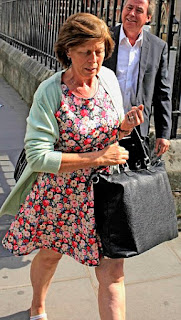
During the case, the court had been told how Mrs Ilott - a mother of five who is still married to her teenage sweetheart Nicholas - was struggling for money and wanted to buy her housing association property in Great Munden, Hertfordshire.

Judges ruled the money, which had been left to the RSPCA, Blue Cross and RSPB, should be awarded to Mrs Ilott due to her 'basic human need' and that it was 'unreasonable' to leave her daughter with nothing.

Mrs Ilott had also argued it was a derivative fortune from assets belonging to her father Thomas Jackson, who died in an industrial accident two months before she was born.

Barrister Brie Stevens-Hoare QC said the family had been kept off the housing ladder and had 'never had a holiday'.

'She had difficulty affording clothes for her family, was limited in the food she could buy and much of what she had was old or second hand,' she said.

She also told the court that Mrs Jackson was 'unreasonable, capricious and harsh' and had left her money to charity to spite her - not because she supported the charities' work - in a 'picture of irrationality'.

She said: 'Mrs Jackson took offence at Heather's choices although they were choices she was entitled to make and it was reasonable to expect her mother to accept.

'Instead her mother consistently undermined reconciliation attempts. Although Heather was at some fault, her mother was the dominant cause.'

Yesterday, following a lengthy series of legal appeals and challenges, the panel of three judges ordered she should be given £143,000 to buy her housing association home, plus a further £20,000 to cover her expenses. The rest of the inheritance will still go to charity.

Following the judgement, James Aspden, solicitor for the three charities said they were 'surprised and disappointed' by the court's decision.

He added: 'Charities rely upon income from legacies and the outcome of this case could have serious ramifications for the future of the charity sector as a whole.

'Nearly £2billion a year is donated to charitable causes through legacies and, without it, much of their work would not be possible.

'This case also raises serious questions about whether people generally have the freedom to choose who they want to leave money to in their will'.

Mr Aspden said the charities would now give 'very careful consideration' to the case before deciding whether or not to appeal to the Supreme Court.

The solicitor added: 'This is a worrying decision for anyone who values having the freedom to choose who will receive their property when they die'.

Sally de la Bedoyere, chief executive of the Blue Cross charity, said: 'Blue Cross depends on the generosity of our supporters and, as such, we will always endeavour to fulfil their wishes.

'Over the past eight years we have defended the wishes of Mrs Jackson to the very best of our abilities. We are deeply saddened that the courts have decided not to honour them'.

Mike Clarke, the RSPB's chief executive, said: 'It is regrettable that, occasionally, courts need to become involved in interpreting the terms of a person's will.

'Not only is it damaging to the work of charities, but it may also cause concern to people who intend to leave a gift to a charity they feel passionately about'.

David Bowles, assistant director the RSPCA, said: 'Legacy income pays for one out of every two animals we save and without it, much of our work would not be possible.

'This court decision goes against a person's desire to give their money to whomever they wish.

'We are immensely grateful for the kindness of people like Mrs Jackson who choose to remember the needs of animals in her will.

'And we hope that this does not stop others continuing to give money to help suffering animals'.


Read more
kissing cause cancer
Kissing has overtaken smoking and drinking as the leading risk factor for developing head and neck cancers.

The humble French kiss can pass on human papilloma virus (HPV), Head of Maxillofacial and Head and neck Surgery at the Royal Darwin Hospital, Dr Mahiban Thomas, said the virus was responsible for 70% of head and neck cancer cases.

Dr Thomas told said if you became infected by HPV in the oropharynx, your risk of developing head and neck cancer was 250 times higher than that of someone without the virus.

While most commonly associated with cervical cancers, HPV can affect both men and women.

There are more than 100 types of the virus, but only about eight ‘high risk’ strains of HPV that can cause cancers in the oropharynx.

The Centers for Disease Control and Prevention said studies suggest Oral HPV could be passed on during oral sex or open-mouthed or ‘French’ kissing, and about 7% of people have oral HPV, but only 1% of people have the type of oral HPV that is found in oropharyngeal cancers.

Dr Thomas said recent studies suggested even engaging in ‘petting’ without sexual interaction could transfer HPV.

‘If you look at the figures coming out of the US, 70 per cent of head and neck cancers are due to HPV,’ Dr Thomas said.

‘There has been a change in high-risk behaviour as far as smoking and drinking goes.

‘If you have an (HPV) infection, you have 250 times the chance of developing cancer of somebody who does not have HPV.’
kissing cause cancer
Dr Thomas told NT News HPV was responsible for a 'tsunami' of head and neck cancer cases.

He said your risk of contracting the HPV virus increased with the number of French kissing partners you had, and people underrated the risks associated with oral sex.

Yesterday marked World Head and Neck Cancer Day.

In 2011, 3121 head and neck cancers were diagnosed in Australia, caused by smoking, frequent alcohol use, sun exposure, radiation, asbestos and HPV.

The Australian Government funds HPV vaccination for 12 to 13-year-old girls and boys which helps protect against cervical cancer, some vaginal, vulva and anal cancers and genital warts.


Read more: DailyMail
man survives lightning strike wins lottery
People often claim you have more chance of being struck by lightning than of winning the lottery. But what are the odds of being struck by both?
  • The odds of getting struck by lightning in Canada are less than one in a million.
  • The odds of winning the Atlantic Lotto 6/49 are even worse --> 1 in 13,983,816.
And the odds that both of these extraordinary events should happen to the same person in Nova Scotia are nearly impossible.

But lightning strike survivor Peter McCathie beat all those odds when he and his co-worker, Diana Miller, collected their million-dollar prize at the Atlantic Lottery offices in Moncton.

McCathie’s brush with death occurred during a boat trip when he was 14. The lottery winner said he was wading through shallow waters near the shore of a lake when he was struck by lightning.

"I was trying to lock the boat up, it was a very sunny day, there was one big, white cloud in the sky and the lightning bolt came through the trees and hit me," He said.

Incredibly, McCathie's daughter was also struck by lightning a few years ago in an eerily similar scenario while working as wilderness guide in Manitoba.

"They had pulled off the lake due to storms, so she was locking all the canoes, making sure they weren't going to get blown away, and she got hit by lightning," said McCathie.

McCathie and Miller have been buying tickets together for about a year, but they never expected to beat the odds.

"I honestly expected to get hit by lightning again first," said McCathie.

So how unusual is his story?

A mathematics professor at the University of Moncton believes the odds may be in the trillions.

"By assuming that these events happened independently … so probability of lotto … times another probability of lightning – since there are two people that got hit by lightning – we get approximately 1 in 2.6 trillion," said Sophie Leger.

Diana Miller is planning a trip to Cancun, Mexico with her share of the winnings, while McCathie says that after 30 years of marriage, it's time for him and his wife to take a second honeymoon.

McCathie also owns the store where he bought the ticket so gets an addition $10,000 from the Atlantic Lottery Corporation.


credit: ctvnews
An amazing surprise for a hearing-impaired man in Istanbul: An entire town secretly learns sign language.
BuzzFeed reported that the man’s sister teamed up with a production crew as part of a Samsung ad campaign; and a month was spent setting up cameras all around his neighborhood.
On the day of the surprise, he walks around town and time after time, people greet him using sign language. At one point, he asks his sister, “What’s going on?”At the end of the video, you can see everything is revealed to him and it’s a very emotional moment that brings him to tears.


Source sited: fox8.com/
How incredible!
When Brian Maixner finally looked into a mirror, he didn’t recognize the man staring back at him.

His face was fuller. The wrinkles in his cheeks were gone. His chin looked more prominent.

And most striking: The smile that for years had been full of big holes and painful infected areas had been replaced with two rows of perfectly straight, white teeth.

Hours after the procedure in Ponca City, Okla., on Tuesday, Maixner was still trying to adjust.


“I’m still in shock,” he said.

Maixner, the cheerful, smiling waiter who is well known to customers at both Doo-Dah Diner, 206 E. Kellogg, and at his previous employer, Ming’s at 1625 S. Seneca, has long struggled with serious dental problems. He never could afford the dental work he needed.

Then, in January, he got a surprise tip from a customer. One Saturday, he waited on out-of-towner Fred Boettcher, who’d had dental problems of his own as a child. Now a successful Ponca City attorney, Boettcher offered to pay for Maixner to get a new smile. He’d done the same for a few other people in the past.

Maixner had his remaining bad teeth pulled by Boettcher’s dentist, Phillip Tyndall in Ponca City. He was fitted with a new set of dentures. In about six to eight months, Maixner said, once the bone heals, the dentist will replace the dentures with dental implants – also a gift from Boettcher.

Maixner said he’ll be back at work and can’t wait to show off his new look. He’ll be on soft foods for a while, and he’s having to learn to speak clearly again.

“I’m enjoying the heck out of this,” he said. “It’s a whole life changer.”

source sited: http://www.kansas.com/
India’s Daughter is the story of the gang rape and murder of a young woman that shocked the world and sparked riots and protests all over India. Grieving parents and one of the rapists tell the story of the night six men brutally assaulted 23 year old medical student, Jyoti Singh while driving around Delhi, India's Capital, in a bus.


"So many of our people grow up thinking that a girl is less important than a boy is. Because she's less important you can do what you like with her."
-Sheila Dixit, DELHI Chief Minister (1998-2013)
On December 16, 2012 Jyoti and a male friend boarded a private bus to return home after going to a movie. The six men on the bus objected to a girl and unrelated boy being out alone and in order to teach them a lesson they beat her friend unconscious and brutally assaulted and gang raped her for almost an hour as the bus rode round and round the highways, before throwing them out of the bus and into a ditch. Against all odds, Jyoti survived two weeks but died after multiple surgeries.
-Badri Singh

From birth Jyoti's parents considered her a gift, a light in their lives. When their daughter decided she wanted to be a doctor, her parents, against the wishes of their extended family, sold their ancestral lands to send their girl to medical school. After working night shifts at a call centre, and sleeping just three hours a night for four years Jyoti had just finished her final exams when her evening out turned fatal.

The brutal and brazen crime inspired Indians to take to the streets for over a month and protest their country's tragic problem of systemic violence against women. Ordinary men and women withstood tear gas, water cannons and police brutality to demand changes in India's attitudes towards women. The collective outrage has led to changes in law and the first glimmers of change in a deeply ingrained mindset.

India’s Daughter also examines the values and mindsets of the rapists whom the filmmakers had exclusive and unprecedented access to interview between their conviction and expected hanging. It exposes a skewed patriarchal society in which an institutionalized view of women as second-class, and even undesirable, citizens leads to such heinous crimes against women. It makes an impassioned plea for change and reveals the deadly price one young woman and her family have paid for the continuing tragedy of violence against women.

"Our daughter's name is Jyoti Singh. In death she has lit a torch...she posed a question. What is the meaning of 'a woman?' I wish that whatever darkness there is in the world should be dispelled by this light." -Badri Singh

India's Daughter is being aired around the world to coincide with International Women's Day (March 8) and will be shown in more than 15 countries around the world. It is a UK-India co-production of Assassin Films and Tathagat Films.

Before the film was even released it has been banned in India and has caused much upheaval. I encourage you take part in this important issue.
She says she is “95% certain it’s not a scam”.
In an interview with TV host and author Phil McGraw on his show Dr. Phil, the woman, Sarah, said she met the man, who calls himself Chris Olsen, 18 months ago.
internet scam,

During that time, Sarah wired large sums of her inheritance to Olsen, who told her he was currently based in Africa. She said: “He told me early on that he was a widower and that he had two daughters, and he was on a business trip in South Africa.”

Sarah, who has been divorced twice, said she was in love with Olsen and was “95% certain it’s not a scam”.
Olsen told her he has been prevented from coming home because he keeps being arrested on false charges. “He’s from Milan, Italy, and moved to the United States about 18 years ago,” Sarah said. “He’s very poetic when he talks to me.”

But the relationship set off alarm bells for her cousin Crystal, who told Dr Phil she believes Sarah is being conned.

Crystal said: “If Sarah continues sending ‘Chris’ money, she’s going to have nothing left.”

According to McGraw’s website, he has been in contact with the embassies of the numerous countries Olsen has claimed to have lived in and has spoken with the FBI about the risk of online scams. Viewers are also trying to track down the man for an upcoming episode. Watch the video below...

Muaharrem is a young deaf man from Istanbul, and his sister, Ozlem, teamed up with a production crew recently to give him one hell of an amazing day.
The Leo Burnett ad firm and Samsung organized the huge stunt for an ad campaign. They spent a month setting up cameras around his neighborhood and teaching his neighbors sign language.

In the ad, Ozlem takes Muaharrem out and about on what he thinks is a normal day. That is, until the guy behind the counter of a local shop greets him with sign language.

Then he goes outside and ANOTHER guy signs at him

By this point he’s starting to get a little weirded out.

He bumps into a woman who signs an apology at him.

Muaharrem and Ozlem get in a cab. The driver signs “hello.”

This is the face of a very, very confused man.

The cab then drops them off in a public square where Muaharrem’s neighbors greet him.

And the production crew reveals the whole thing was part of an advertisement for Samsung Turkey’s new video call center for the hearing impaired.

And he, obviously, loses it, because advertisement or not, it is one of the sweetest things ever.

According to BuzzFeed a
 Samsung spokesperson confirmed that everything you see in the ad is genuine. 


more details: buzzfeed.com

According to a USA Today report, Bobbi Kristina Brown’s breathing tube has been removed. Her condition, however, is unchanged.

A source close to the situation told the publication that removing Brown from the ventilator does not necessarily mean a decision has been made to take her off of life support.

Brown has been hospitalized since Jan. 31 when her boyfriend, Nick Gordon, and a friend, found her unresponsive in a bathtub in her Georgia home.

This is a “normal” procedure, done after a certain amount of time to prevent infections, says the family source.
According to Dr. Jordan Josephson, an ENT specialist at Lennox Hill Hospital, the tracheotomy procedure is typically done when people are expected to be on a ventilator for more than a couple of days.

It is done to protect the vocal cords and to afford better access to keep the lungs clear of fluid.

“If the expectation is she’s going to be on for weeks, months – who knows how long, the best way to deliver oxygen to the lungs is through the tracheostomy” (the hole left in the throat after the tracheotomy procedure is performed).

Josephson says, “It’s a protective measure. There may be a slight scar, but in most cases that’s it.” He adds that it will not leave Brown with voice problems, “She absolutely will be able to speak.”

I’ll keep you updated with the latest.
Google has shed some light on one of their latest endeavors and this one looks to help the one in every 19 people in this world that has diabetes. Uncontrolled blood sugar puts people at risk for a range of dangerous complications, some short-term and others longer term, including damage to the eyes, kidneys and heart. Not only do you have to keep your sugar levels under control but the process to monitor your glucose level is disruptive and painful.

Google is now testing a smart contact lens that’s built to measure glucose levels in tears using a tiny wireless chip and miniaturized glucose sensor that are embedded between two layers of soft contact lens material. They’re testing prototypes that can generate a reading once per second and even looking into integrating tiny LED lights that could light up to indicate that glucose levels have crossed above or below certain thresholds.

Multiple clinical research studies have been completed so this smart contact lens is getting closer and closer to becoming a reality. Talks with the FDA are ongoing and they’re exploring partners that can leverage this technology for a smart contact lens and develop apps that would make the measurements available to the wearer and their doctor.
Yesterday, Jon Stewart and Comedy Central both officially announced that Jon will be stepping down as host of The Daily Show after nearly 17 years at the helm. Though Jon hasn’t outlined future plans or exactly when this will take place, he did mention that it will happen later this year around the time his contract lets out. Jon’s shoes are big to fill and though no successor has been named just yet, he or she better be damn good. Check out the video below of Jon Stewart making the big announcement in front of an unknowing audience yesterday.
The Google Translate app just got a massive upgrade, giving users some new features that will really make communicating with others a breeze when you’re traveling. For example, the new Word Lens feature lets you translate instantly without Internet or data by just pointing your camera to a sign or text. This currently supports French, German, Italian, Portuguese, Russian, and Spanish. You can even just snap a photo, highlight the text, and get a translation across 36 languages with Camera Mode. When you’re in conversation mode, there’s no need to pick the two languages being used as automatic language detection does all the heavy lifting. Couple these new features with existing tricks like being able to star your favorite translations for quick, offline access and you’ve got a pretty amazing translation app. Head to the Android Google Play store or the App Store to get the latest version of the Google Translate app.
Do NOT ever, ever, ever underestimate the power of a father’s love. Samuel Forrest just overcame a major hurdle as a new dad, and he’s only been at it for a few weeks. He is the proud father to a beautiful son, born January 21st in an Armenian hospital. Since then, Forrest has proven to be a deeply devoted dad to baby Leo, who was born with Down syndrome, as well as a champion for change.

He told ABC News, “They took me in [to] see him and I looked at this guy and I said, he’s beautiful — he’s perfect and I’m absolutely keeping him.” While it may seem strange that NOT keeping Leo was even a consideration, according to Forrest, a native of New Zealand, Armenian hospitals have an unconventional practice.

“What happens when a baby [with Down syndrome] is born here, they will tell you that you don’t have to keep them,” he told ABC News. While Forrest was unwavering in his decision to parent his beloved child, his wife reportedly gave him an ultimatum: give up the child or face a divorce. After Forrest decided to keep Leo, his wife filed for divorce, and Forrest began making plans to return with his newborn son to New Zealand. (His wife confirmed her delivery and divorce to ABC News but wouldn’t comment further on the issue).

Forrest’s situation was unexpected and difficult. He needed to uproot his life, now that his marriage ended just days after becoming a father to his special-needs son. Worried about having the financial ability to support Leo on his own, Samuel started a GoFundMe account, in which he hoped to raise $60,000 to get them through a year of medical care and physical transition. As of midday today, he has raised over $357,000.
The 2015 Sports Illustrated Swimsuit Issue is coming out on February 9th (aka, in five days) and for the first time in the history of the magazine, they’re including an ad that features a “plus-size” model.The model, Ashley Graham, is featured wearing a tiny black string bikini, and she looks AMAZING —naturally.

The ad, according to ETonline, is part of the SwimsuitsForAll campaign (if you recall, SwimsuitsForAll recreated last year’s Swimsuit Issue and replaced the models with more full-bodied, curvier ladies to challenge our impossible beauty standards), #CurvesinBikinis. The viral movement encourages curvy women to feel gorgeous in their own skin, and in any kind of swimsuit.

This is monumental news, considering Sports Illustrated is known for solely selecting smaller-sized models for their swimsuit layouts. While ALL bodies are beautiful, it’s important to represent every kind of body type by including diverse shapes and sizes in the media. In a press release, Graham states, “I know my curves are sexy and I want everyone else to know that theirs are too. There is no reason to hide and every reason to flaunt. The world is ready for more curves in bikinis.”

And we agree full-heartedly. Every woman, regardless of her size, should know that her body is beautiful, and it’s awesome that this sentiment will be reflected in Sports Illustrated.

Additionally, Graham is helping promote the way we should be thinking about health and body image: the healthy way. The model states, “I think that you can be healthy at any size and my goal is to help and educate women on that. It doesn’t matter if you’re a size 2 or 22 as long as you’re taking care of your body, working out, and telling yourself, ‘I love you’ instead of taking in the negativity of beauty standards.”

Out with the negative beauty ideals, and in with the positive. That’s something we’re always behind, 100% of the time.


By now, you may know the advantages of LED lighting. They last much longer, consume less power, come in a variety of colors, and can even be controlled and programmed from a smartphone. Big cities, from New York to Los Angeles to Buenos Aires, are lighting their streets with LEDs. And now the latest to go LED? Those bright lights at the Super Bowl.

This year's championship game, at Arizona's University of Phoenix Stadium, will bask under the glow of semiconductors. The stadium recently swapped out 780 metal halide fixtures for 312 LED fixtures (44,928 individual LEDs).

The new lights consume some 75% less power—310,000 watts versus 1.24 million watts for metal halide bulbs—and produce double the light compared traditional bulbs. Further, LEDs provide more even lighting, reducing shadows and improving lighting conditions for cameras and spectators alike.

Lighting is obviously a critical part of the game that goes largely unnoticed, until something goes wrong.

Two years ago, the Super Bowl was suspended for over a half hour after a blackout knocked out power and lights. While LEDs are still susceptible to a loss of power—once power is restored, they're able to light up again immediately. Metal halide bulbs can take up to 20 minutes to warm up to maximum brightness.

Most years the big game is all about the commercials, nachos, beer, and halftime show. This year? Yeah, it's still all about those things. But from swooping cameras on wires to super slow motion replays, smartphones in the stands to Twitter accounts gone wild—increasingly, technology is driving the spectacle.


And this year, the hits, Hail Mary's, and wardrobe malfunctions may be just a little sharper under those LED bright lights.
Not so long ago we covered a miniature, ant-sized computer chip designed to be embedded in everyday stuff to make it smarter. Instead of a cumbersome battery in need of constant recharging—the chip is powered wirelessly by radio waves.

Now, the same Stanford group, led by assistant professor of electrical engineering Amin Arbabian, is working on a sister chip destined to be implanted in the body to keep tabs on internal biological processes and distribute drugs and other therapies.

To date, medical implants bristle with wires or, when they’re wireless, are made bulkier by onboard batteries. Ideal implants would be wireless and battery-free.

Unlike chips to be embedded in inanimate objects, implanted chips need to be fully compatible with the human body and present minimal health risk. To that end, Arbabian chose ultrasound to power his chip. Ultrasound is already safely used for sensitive procedures, like fetal imaging, and can provide the needed power.

How does it work? The chip houses a special piezoelectric material that flexes in response to incoming ultrasound waves creating a small amount of electricity.

"The implant is like an electrical spring that compresses and decompresses a million times a second, providing electrical charge to the chip," says Marcus Weber, a Stanford graduate student who working on Arbabian’s team.

Arbabian’s team found their device responded to targeted ultrasound through three centimeters of chicken meat—their human flesh analog.

As it’s powered, the chip is designed to translate ultrasound to power, process commands for particular actions, and send back confirmation by radio. Such tasks might, in the future, include biosensing or delivering electric shocks to relieve pain or ease the worst symptoms in neurological conditions like Parkinson’s disease.

Currently, the chip is about the same size as the end of a ballpoint pen. The team is working to make the next generation of chips a tenth that size. The hope is such tiny implants might one day form a sensory network for in vivo brain research.

Arbabian’s chips may well prove forerunners to such implants, or the team’s wireless power tech might be combined with other cutting-edge implant designs.

Recently, for example, we wrote about a new graphene biosensor. The sensor is extraordinarily thin (four atoms across), transparent, flexible, and biocompatible. Because the graphene chip allows light to pass through, it lends itself to brain research using traditional imaging methods and cutting-edge optogenetics.

Whichever technology, or combination of technologies, wins out, it appears a new generation of digital technology is poised to be implanted—and that’s exciting news for pure research, medical diagnostics, and the humane therapies of tomorrow.

Ever bought a king-size box of colored pencils and marveled at all the names? Burnt sienna, cerulean blue, tuscan red. The world is overflowing with colors, too many to count or name. What if you had a single pen that contained them all?

The Scribble color matching pen (or stylus) uses a color sensor and LED illumination to sample and upload colors (say from your wall or a piece of clothing) to a mobile device or computer, and then reverses the process, allowing you to draw in any color.

The pen works like a handheld printer, using its ARM 9 microprocessor to digitize colors and mix the inks in an onboard CMYK cartridge. Scribble can reproduce over 16 million colors—100,000 of which can be stored on its 1 GB onboard chip. It runs on a rechargeable lithium ion battery and connects by Bluetooth or micro USB.

Scribble not only offers multiple colors all in one package, it also offers multiple stroke weights with its replaceable nib and six tip sizes. The pen works with iOS, Android, PC, and Mac and is compatible with Photoshop and Corel.

It should probably be noted this isn’t an entirely new idea. It's been floating around for awhile—see thisconceptual design by Jinsun Park, for example. But no one (as far as we can tell) has yet succeeded in making it into a tangible product for sale.

Though the Scribble team has a working prototype, they needed Kickstarter to fund creation of the final product. If all goes to plan—and often it doesn't, as nailing down a manufacturing process can be a sticking point—it'll be available late next spring.

The team has big expectations, saying in their first press release Scribble is “cutting edge technology that’s on the verge of becoming a household gadget.” They may be right. The Kickstarter was funded in five hours and is currently closing in on $300,000 with more than a month left in the campaign.

But going from Kickstarter to household gadget won't be easy. For one thing, $149 (more than an 8GB Kindle Fire) isn't cheap. And refill cartridges ($15 to $30 each) will add to costs, maybe appreciably, depending on how quickly users run out of ink.

Scribble may be too expensive for kids or technophobic crafters. Also, the pen can store lots of colors, but how easy it is to find and switch them isn't clear. Is an external device required every time you want a new color? What's the pen's interface like? Depending too much on a nearby computer or mobile device might limit some of its perceived utility.

For half the price, the stylus which lives more exclusively in the digital world (and no ink required), might be better value. Designers could sample colors for clients on the spot or match mystery paint on the wall. The color blind could use it to identify colors. These presume a degree of accuracy, but they seem like reasonable applications.

At the same time simple color scanning functionality can already be found in free smartphone apps. Maybe they aren't as accurate, but such apps using smartphone cameras are available for Android and iOS. And smartphones may soon come stock with new visual sensors. Google Tango or this new Microsoft Research device show that the visual powers of mobile devices are poised to move beyond simple cameras.

Will Scribble become a household device? Or will some of its powers be usurped by smartphones? We don't know. In any case, it's still a cool example of miniature tech going mobile and miniature sensors providing a two-way link between real and digital.

Making people cry is not a very nice thing to do, unless those people suffer from chronic eyeball dryness. Then you’re doing them a favor. Scientists at Stanford-backed Oculeve have created a tiny implantable device that can do just that — stimulate tear production at the push of a button. This device has the potential to help more than 20 million Americans who suffer from a lack of natural tears, and all it takes is a little jolt of electricity in the right place.

The device (which doesn’t have an official name yet) is an implantable neurostimulator that uses micro-electrical pulses to increase tear production. It’s designed to treat more than a simple case of dry eyes you get from staring at a screen for too long. Many people have chronically dry eyes due to medication side effects, autoimmune disease, or hormone problems that cause the lacrimal glands to under-produce tears. This can lead to vision problems or corneal damage over time. Eye drops can offer a temporary fix for some people, but it’s not as good as the real thing.

Your lacrimal glands are located toward the upper outer section of each orbital and produce a slippery mixture of oils, water, proteins, and mucus that lubricate the eyes. It sluices down the tear ducts and is spread across the eye with each blink. The lacrimal glands are the target of Oculeve’s neurostimulator. It’s implanted via injection or with a small incision below the eyebrow or in the nasal cavity. It can then shoot short electrical pulses into the lacrimal glands to kick start tear production. Basically, it shocks your face and makes you cry, but that’s a good thing in this case. Promise!

So let’s say you’ve got a problem with chronic eyeball dryness, and you have the Oculeve neurostimulator implanted. How do you use it? The company is developing a remote control that will be able to adjust tear production on the fly. Simply press a button and your lacrimal gland gets boosted into high gear. The micro-electric pulses should not be powerful enough to cause discomfort.

It might be controlled wirelessly, but what about power? It’s not like you can plug a microUSB into your face to recharge the battery. According to Oculeve’s Michael Ackermann, it will have inductive wireless chargingtechnology that can juice up the device’s tiny battery. You can see above that about a third of the neurostimulator’s total length is taken up by the battery. I suppose that would require holding an inductive charging coil uncomfortably close to your face for a little bit. Oculeve isn’t saying how often it will need to be recharged, but the entire device is roughly 1 cm long, so the battery can’t have much capacity.

Oculeve is currently going through the process of getting regulatory approval in the US. It’s running clinical trials to show the device is safe and effective, which can be a long process because of the understandably strict standards for medical devices. The company will also seek Canadian and EU regulatory approval in the near future.


A new medical accessory developed by researchers at Columbia Engineering can detect HIV and syphilis in patients using a $34 smartphone accessory that duplicates test functions that normally requires $18,000 worth of medical equipment.

The new dongle draws power from a headphone jack and performs three types of tests — an HIV antibody test, a treponemal-specific antibody test, and a non-treponemal antibody test. These latter tests are for syphilis, but the lab equipment required to implement them is far too expensive for many hospitals or clinics in the developing world to implement.

The smartphone accessory uses a “one-push vacuum” to create a negative-pressure chamber that moves a set of reagents (required for the testing process) into the test chamber from a pre-stored cassette. The use of the headset for power is also considered an important innovation, as this eliminates the need for a dongle-specific battery of any sort. The headphone jack can also be used for data transmission, which is how the dongle interfaces with every smartphone on the market — since audio jacks are also standardized, there’s no need to implement iPhone or Android-specific variants. A video of the sample-taking and test process is shown below
The project developer, Samuel K. Sia, has emphasized that the goal is to offer a lab-quality immunoassay in a mobile, handheld device that can deployed anywhere with minimal training. Targeting a disease like HIV is particularly important in pregnant women, as early treatment can significantly reduce the chance of passing the virus to their offspring. Similarly, syphilis can be transmitted between mother and child at birth. The two conditions are now often linked, and 90% of syphilis cases are now in the developing world thanks to the widespread deployment of antibiotics in more developed countries.

According to the team, their initial test work in Rwanda focused on 96 patients, 97% of whom said they would recommend the test again to others based on ease-of-use, speed, and the ability to test for multiple disease. The device apparently does have a tendency to throw false positives that needs to be tuned further, but the end result is that technology like this could greatly reduce the cost of care for people in the developing world over the long term.

The research team also wants to bring the same technology to the United States and other developed nations and while there’s likely to be a lengthy approval process, spiraling medical costs in the US, at least, mean that any such test devices would be extremely well received. This particular breakthrough mirrors others we’ve seen in recent years, where the advent of modern cell phone technology and integrated sensors has allowed for simple, relatively cheap medical devices to mimic the effects of complex lab equipment that costs thousands of dollars.


February 5 was World Nutella Day (my lack of knowledge of these things is probably why I don’t get invited to the really good parties). To celebrate this event, Cooler Master decided to illustrate the value of the spreadable hazelnut delight by using it as thermal paste. This experiment isn’t without some history. Back in 2002, Dan, of Dan’s Data, compared a variety of thermal goops against Vegemite and toothpaste. The results, hilariously, favored the toothpaste (Vegemite, otherwise known as Satan’s Hellfood, tied with the other thermal compounds).

The video below doesn’t give much context for Nutella’s relative performance but implies that the material is more than capable of keeping a chip nice and cool. So, should you throw out the Arctic Silver in favor of hazelnut?


Understanding thermal paste

The first thing to understand about thermal paste is that, from a physics perspective, it’s inherently a kludge. By the time heat from the CPU core gets to the top of the lid, it’s already passed through the entire chip stack (not counting secondary heat paths), through the solder or thermal paste between the CPU die and the CPU lid, and then passed through the lid material itself. In other words, the heat that makes it to the top of the lid is a fraction of the total heat that can be dissipated.

Once it hits the lid, that heat needs to radiate from the lid to the actual heatsink and fan. Air is a miserable conductor of heat, which is why we put various forms of goop in between the CPU surface and the heatsink. Nutella, likely has a significant amount of oil in it, which is why it conveys heat particularly well, but as it dries, that oil is going to rapidly evaporate. What’s left will be a sort-of Nutella-dust that transmits heat between CPU and heatsink about as well as a wool blanket.

In short, don’t try this at home. But if you have a CPU you don’t care much about, and a list of handy foods you want to experiment with as thermal transfer materials, we promise to publish the results of the first person who conducts a credible test to discover whether ham or turkey makes a better TIM (thermal interface material).